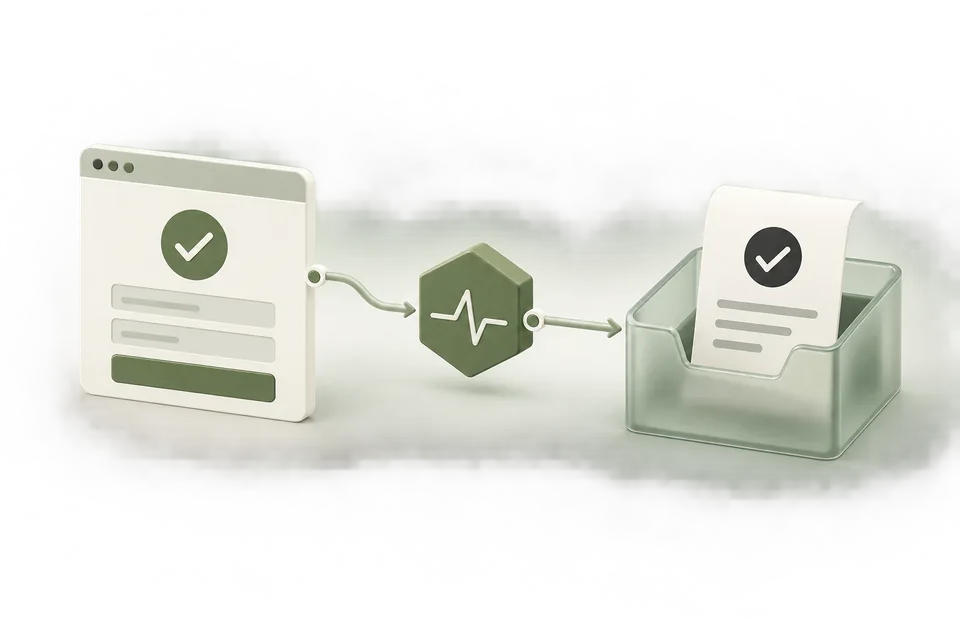

ChatGPT Ads are paid advertising placements available through OpenAI’s advertising products. Treat a paid campaign as a distinct acquisition channel with its own settings, billing, and measurement. Paying for an ad does not buy a position inside an organic answer.
If you are evaluating the channel, begin with the customer problem and the destination you can offer. A product that is easy to describe still needs a clear landing page, an achievable acquisition cost, and a reliable way to measure a successful customer action. For the broader independent overview — how ChatGPT ads work, how to buy them, and what OpenAI publishes on cost — see the ChatGPT ads guide.
Paid placement and organic discovery
A person may discover your business in an unpaid answer, click an ordinary website link from a conversation, or interact with an advertisement. Those paths can all produce visits, but they are different traffic sources. A report about organic ChatGPT referrals is not evidence of the conversion rate of a paid ChatGPT Ads campaign.
Keep this distinction in your analytics naming. Use explicit campaign tags for paid destinations and record the campaign IDs alongside them. If an agency presents a channel benchmark, ask whether its denominator is ad clicks, website sessions, or all referrals from ChatGPT.
The components you will manage
A campaign organizes the objective and budget. Its ad groups contain the relevant delivery settings, and its ads contain the creative and destination. Measurement connects customer actions on your website or server with conversion definitions and reporting.
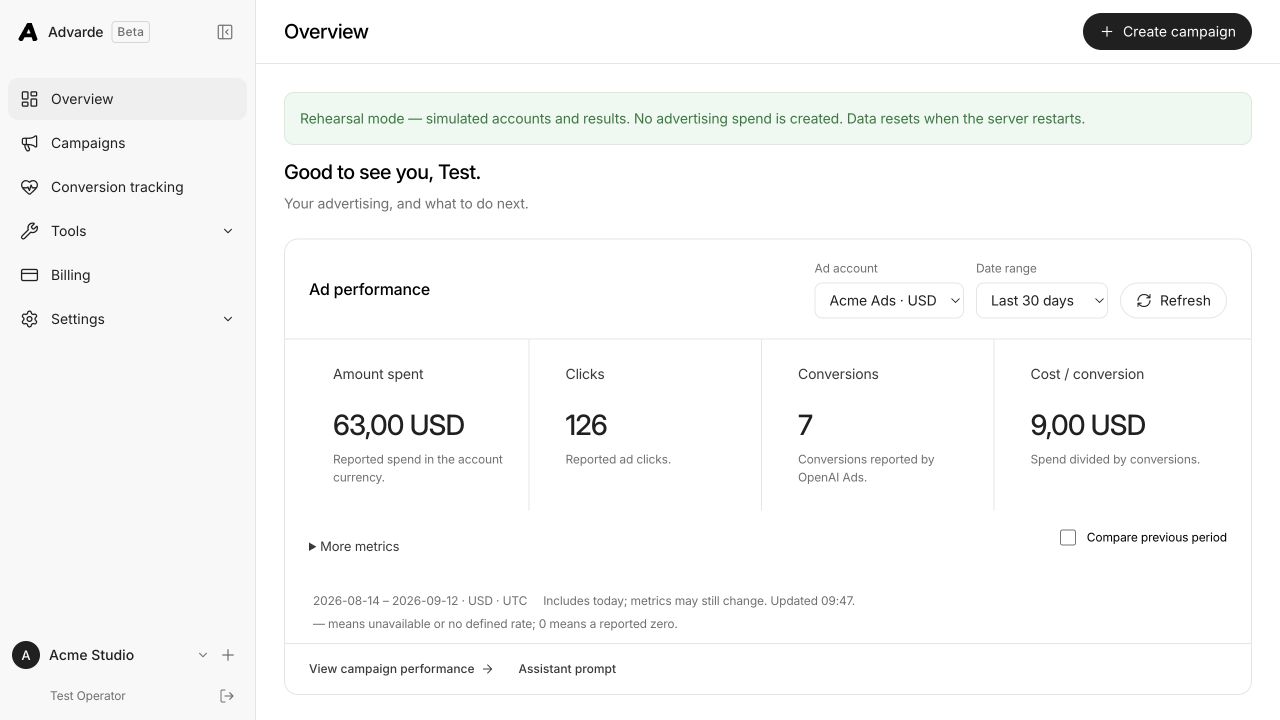
Advarde adds a workspace around that workflow: connected advertiser accounts, saved campaign drafts, reviewed changes, reporting, and compatible AI assistants. It does not replace OpenAI’s advertiser eligibility checks or make every feature available to every account.
| Component | What to decide |
|---|---|
| Business outcome | The completed action that creates value |
| Campaign | Objective, spending allocation, and launch boundaries |
| Ad group | Buying situation, settings, and bid where available |
| Creative | Offer, supporting image, and destination |
| Measurement | Event definition and reporting interpretation |
What a first test can answer
A focused test can establish whether the campaign delivers, whether the destination attracts relevant visitors, and whether those visitors complete the action you intended. It may take a longer observation period to estimate customer quality, renewals, or profitability.
For a lead generation business, record the progression from lead to qualified lead to customer. Ten form submissions can look promising while producing no qualified conversations. Conversely, a small number of valuable leads may justify continued testing even if the headline click-through rate is unremarkable.
What to prepare before opening a campaign
Write down the offer, one audience problem, an initial budget ceiling, and the evidence needed to continue. Prepare a destination that supports the ad’s promise and test the conversion flow. Decide who is responsible for billing, publishing website tracking changes, reviewing the campaign, and monitoring results.
Use the launch checklist to make these decisions visible. When a teammate or AI assistant prepares the campaign, give them the same brief. A shared brief prevents a technically valid campaign from representing a different business experiment than the one you approved.
Sources and verification
Platform details checked on September 11, 2026. Your account may expose a different set of features. Examples are illustrative unless a dataset is explicitly supplied.