

A good campaign structure makes a business hypothesis easy to test and a problem easy to locate. It is not a competition to create the most ad groups. Start with a small structure and split it when there is a clear difference in the decision you need to make.
Use the campaign for a coherent objective
A campaign should have a clear outcome and spending allocation. If one set of ads seeks purchases while another seeks qualified consultations, forcing them into the same decision framework makes reporting harder to interpret. Separate objectives when the account supports the required configuration and the business case warrants it.
Record budget type, currency, timezone, geography, and dates in the brief. These fields are easy to overlook when a team focuses on ad copy, but a correct headline cannot compensate for spending from the wrong account or using the wrong budget interpretation.
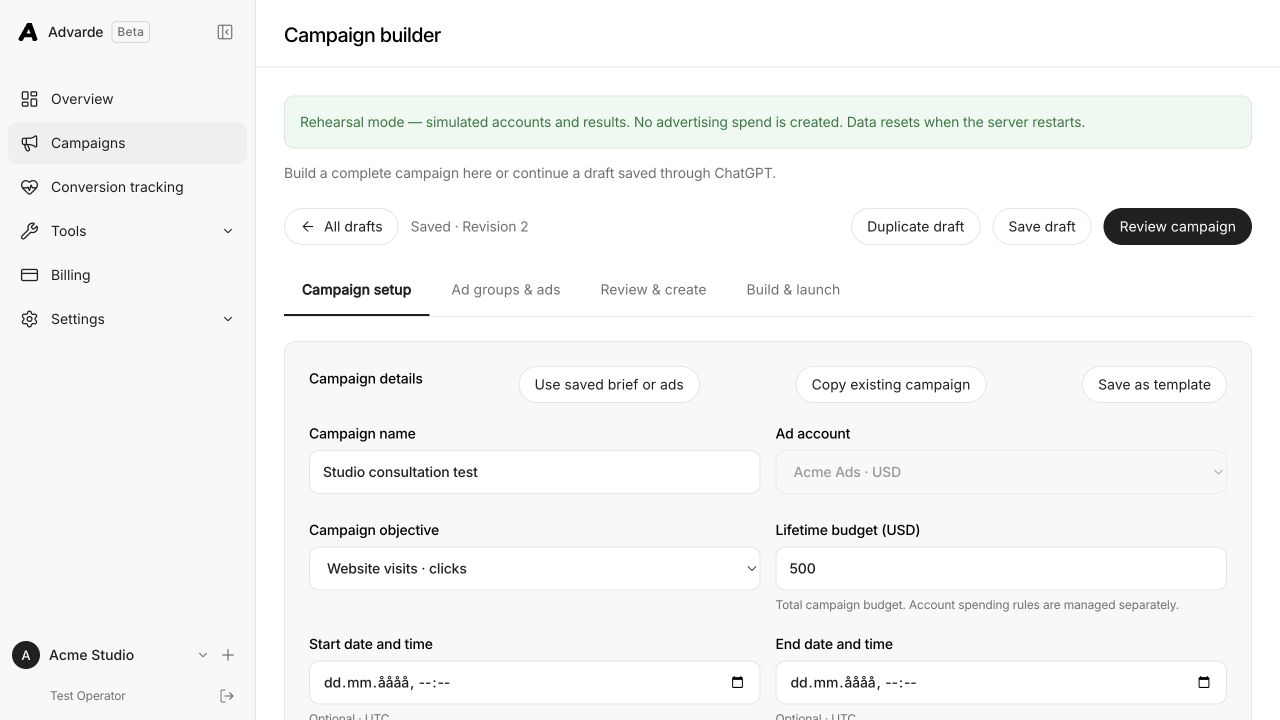
Use ad groups for buying situations
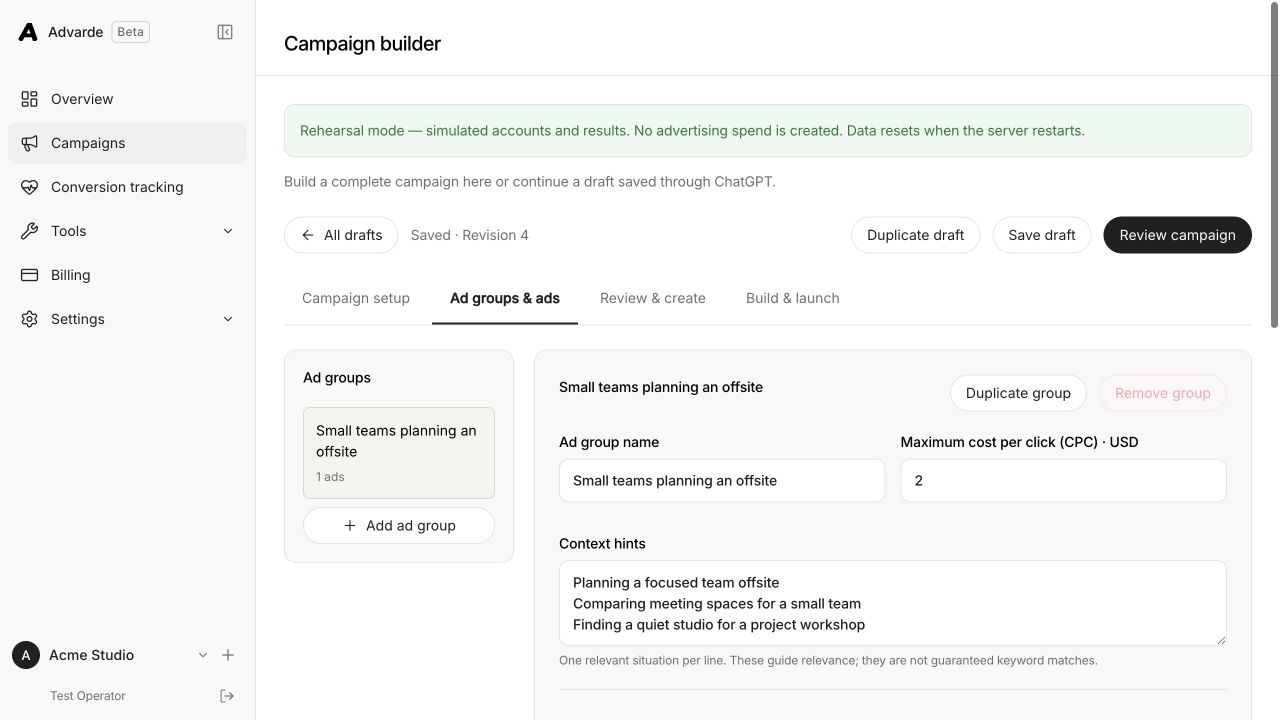
An ad group should correspond to a meaningful context or operating difference. For accounting software, “a freelancer preparing the first tax return” differs from “a finance team consolidating several entities.” The message and landing page may differ as well.
Avoid splitting every paraphrase into a new ad group. If two groups use the same offer, bid, destination, and evaluation rule, ask what decision the split enables. Excessive subdivision produces more objects to review and less evidence per comparison.
| Level | Example | Reason for separation |
|---|---|---|
| Campaign | Accounting software trial | One trial acquisition objective |
| Ad group A | First-time freelancer | Simple setup and individual workflow |
| Ad group B | Growing finance team | Collaboration and reporting needs |
| Ads in each group | Two distinct benefit angles | Compare messages within a coherent situation |
Keep creative variants interpretable
Use a small number of deliberate creative variations. A reliability message and a speed message test different reasons to buy. Changing the headline, image, audience context, and destination simultaneously makes a result difficult to explain.
Name variants so that a report can identify the hypothesis. “Freelancer — setup time — v1” carries more information than “Ad 7.” Include the version in the brief or campaign tags and keep a record of the exact creative that ran.
Review the hierarchy before applying changes
Review campaign settings first, then ad-group settings, then every ad. Confirm that each child object belongs to the expected parent. Workbook imports need the same discipline: the campaign name used by an ad-group row must resolve to a campaign, and the ad-group name used by an ad row must resolve unambiguously.
Advarde’s saved draft and review step let the team examine the proposed structure before creation. Start with paused objects, inspect the resulting IDs and status, and activate only the reviewed version. A draft name is not a durable substitute for the platform ID after creation.
Split when the evidence requires a different decision
A split may be useful when a geography needs a separate budget, an offer needs a distinct conversion event, or a buying situation warrants a different destination. Consolidation may be useful when several groups represent the same hypothesis and produce too little evidence to compare.
Write the reason for a structural change in the activity record. The next reviewer should be able to understand whether a performance change followed a new offer, a budget shift, a measurement change, or a reorganization.
Sources and verification
Platform details checked on September 11, 2026. Your account may expose a different set of features. Examples are illustrative unless a dataset is explicitly supplied.