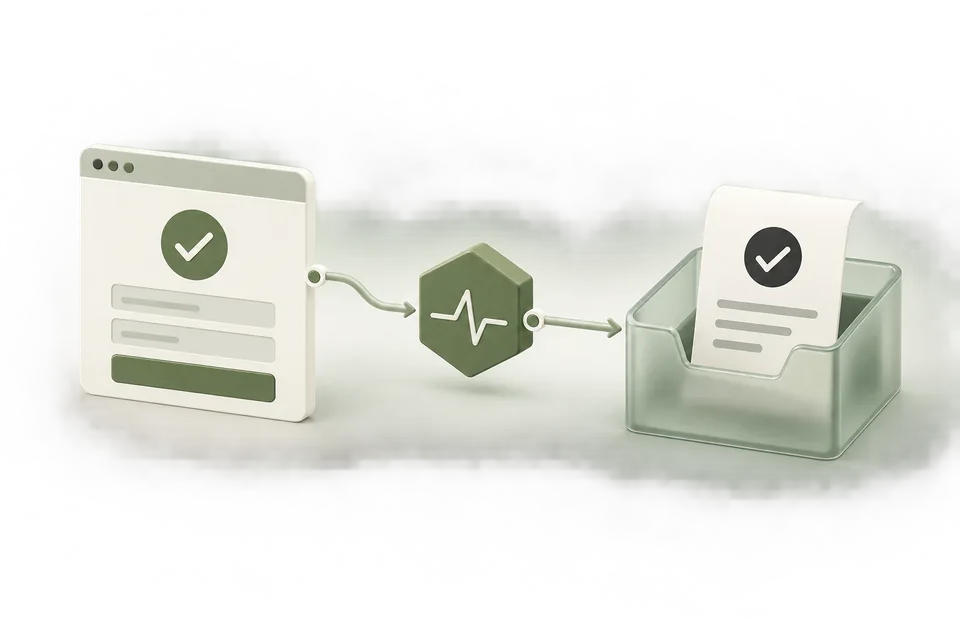

ChatGPT Ads and GA4 do not necessarily describe the same population or apply the same reporting rules. An ad click, a website session, a received event, and an attributed conversion are different observations. Begin with definitions before treating every difference as a tracking defect.
Compare matching units
Compare ad clicks with landing visits as a delivery check, while recognizing that a click may not become a measured session. Compare completed business actions with measured events as an installation check. Compare attributed conversions only after documenting the attribution rules of both systems.
Do not divide platform conversions by GA4 sessions and present the result as a platform conversion rate without labeling the mixed sources. A useful reconciliation table preserves each metric’s source and denominator.
| Layer | Example observation | Purpose |
|---|---|---|
| Ad platform | Clicks and spend | Traffic delivery |
| Web analytics | Tagged sessions | Measured website arrivals |
| Application | Confirmed orders or accepted leads | Business record |
| Attribution report | Credited conversions | Allocation under reporting rules |
Align time and campaign identity
Use the same start and end dates and record both timezones. Inspect a complete period rather than a live partial day. Allow time for delayed reporting and downstream lead qualification before interpreting a discrepancy.
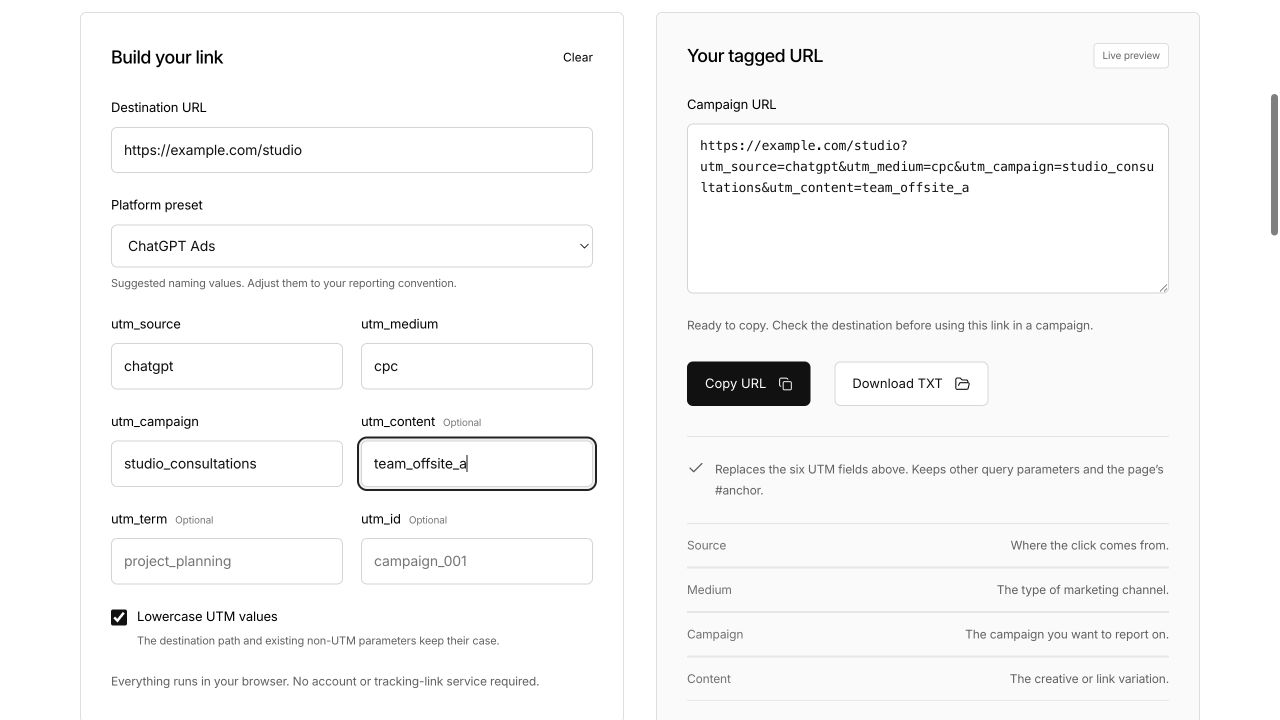
Use consistent UTM values and retain a mapping to platform campaign and ad IDs. Inconsistent source or medium naming across creatives is a common cause of split sessions — build tags with the UTM URL Generator when you need a repeatable convention. Test the actual destination through redirects. A payment domain, link shortener, or landing-page redirect can change the data available to your analytics implementation.
Check consent and browser measurement
A visitor can reach a page without becoming a measured analytics session. Consent choices, blocked scripts, navigation failures, or rapid exits can affect what each tool observes. Investigate these possibilities with controlled tests instead of assuming one dashboard is universally correct.
Check whether the conversion event means the same thing in both systems. A GA4 event triggered by a submit button and an advertising event triggered by server acceptance describe different stages. Give each a precise name and use the same completed action when making a like-for-like comparison.
Reconcile a small sample before the aggregate
Choose a small set of permitted test actions with known timestamps and IDs. Verify the destination tags, application record, browser event, and server delivery where relevant. This establishes whether the implementation works for those paths.
Then inspect the aggregate period for differences in attribution windows, credit allocation, source classification, and report freshness. Explain the remaining gap as an identified difference or an unresolved question. Avoid adjusting the data merely to produce matching totals.
Publish the reporting definitions
Include a short definitions block in the client report: date range, timezone, conversion event, attribution settings, source systems, and known limitations. If the definition changes, mark the change date so readers do not interpret a measurement change as a performance trend.
Use the report template to keep platform results, analytics observations, and business outcomes in separate columns. The purpose is to connect the evidence, while preserving what each source can actually establish.
Sources and verification
Platform details checked on September 11, 2026. Your account may expose a different set of features. Examples are illustrative unless a dataset is explicitly supplied.