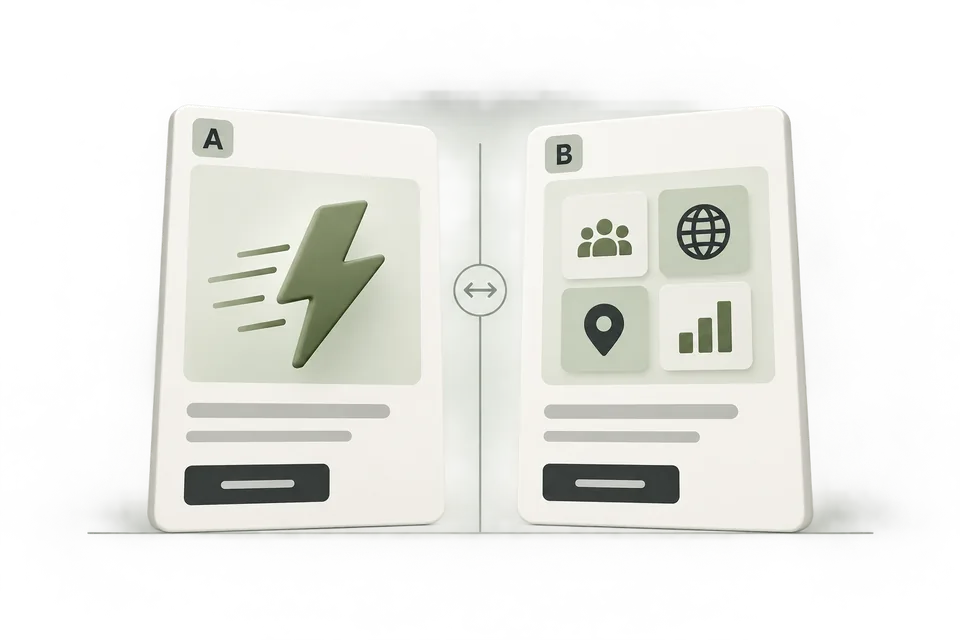
A test plan states what you want to learn and how the result will change a decision. Write it before launch so the success criteria do not move every time the report refreshes.
Download the test plan ↓Choose one primary question
State the customer situation, offer, and proposed reason to buy. Define the primary business outcome and the evidence needed to measure it. Record supporting metrics as diagnostics, not alternative success criteria to choose afterward.
For example, a service business might test whether an approved consultation offer produces qualified bookings within an affordable cost range. The template includes a clearly labeled example to show the level of detail.
Make the economics and limits explicit
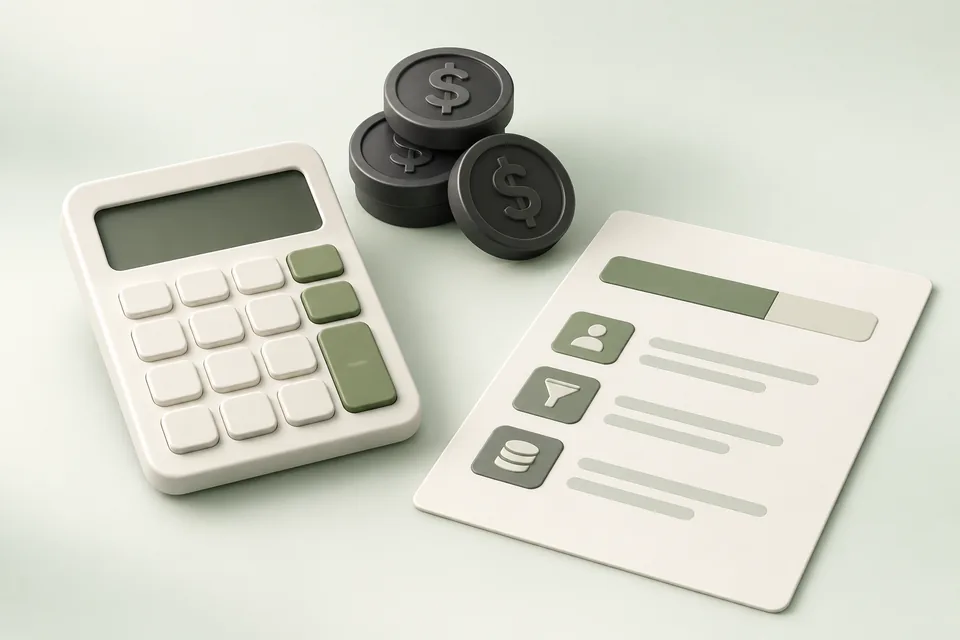
Enter the contribution estimate, conversion assumptions, expected click cost, and total test budget. Use a downside scenario where the inputs are uncertain. Separate media from production and management costs.
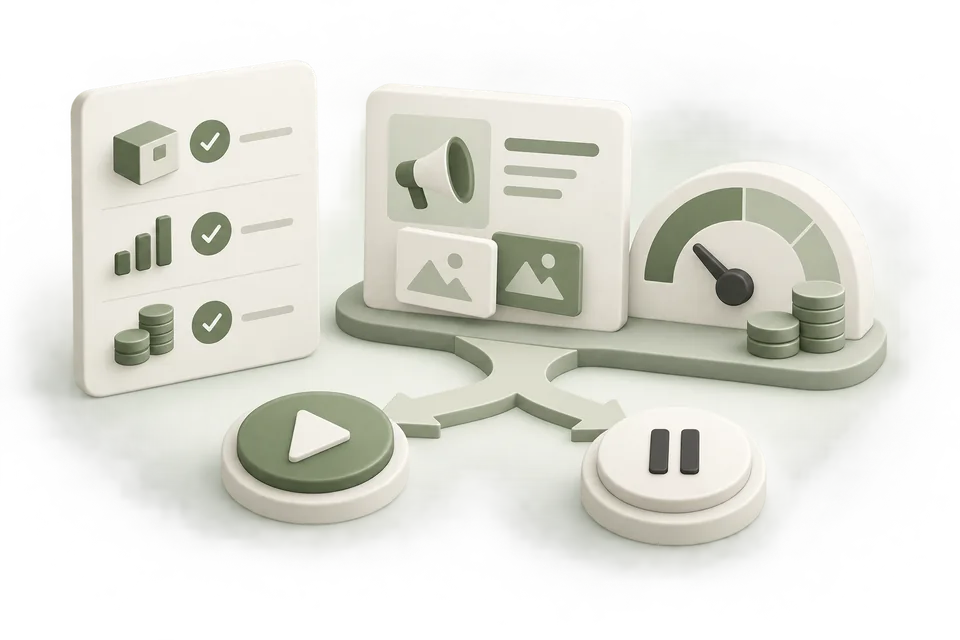
Set the review date and conditions for pausing immediately, such as a broken destination. A maximum spend is an operating boundary; it does not make the expected number of conversions certain.
Define the possible decisions
Write what would support continuing, revising, or stopping the hypothesis. Include an insufficient-evidence outcome so a small or delayed sample does not force a false conclusion.
At review time, preserve the actual counts, dates, changes, and limitations. State the next experiment and owner. Keep unsuccessful tests in the record because they prevent repeated spending on the same unresolved assumption.