
ChatGPT Ads are worth testing when you can state a plausible customer situation, provide a relevant offer, and measure an outcome that matters to the business. A channel’s novelty is not enough to justify a budget, and a small unsuccessful test is not proof that it can never work.
Check whether the offer can answer a real question
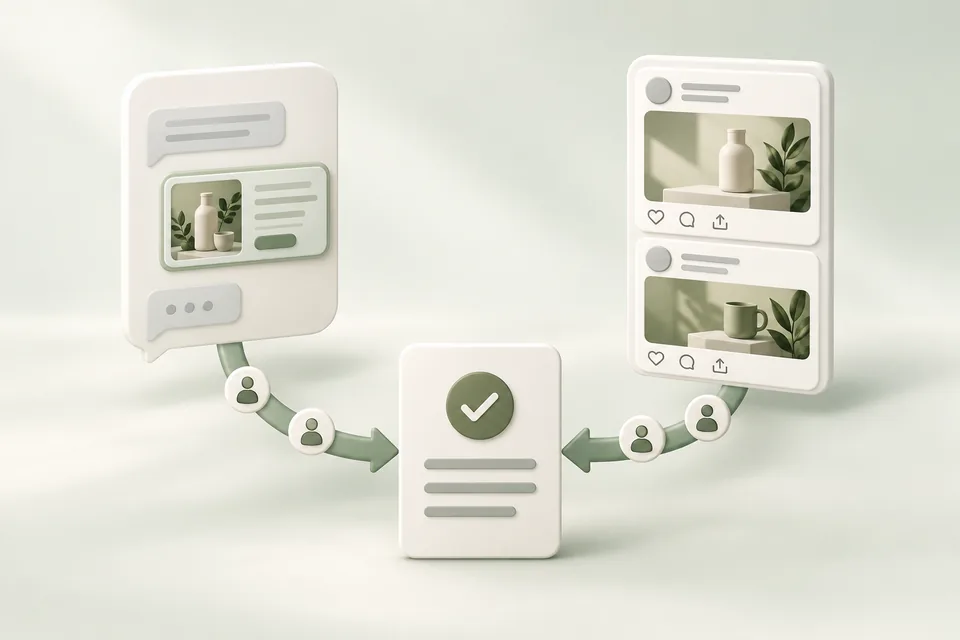
Write three questions a qualified buyer asks before purchasing. For each, identify the page, product evidence, or service explanation you would show them. If the offer does not help answer any of those questions, refine the proposition before expanding the campaign.
Use supported claims. A buyer comparing tools may need an actual interface, a workflow example, or a clear prerequisite. Broad statements about being “best” create less useful information than showing what the product does.
Calculate the affordable outcome
Choose a contribution estimate and a conversion path. A store can begin with contribution per order; a service business can use customer contribution multiplied by the qualified-lead close rate. Include acquisition costs outside media when deciding whether the plan is sustainable.
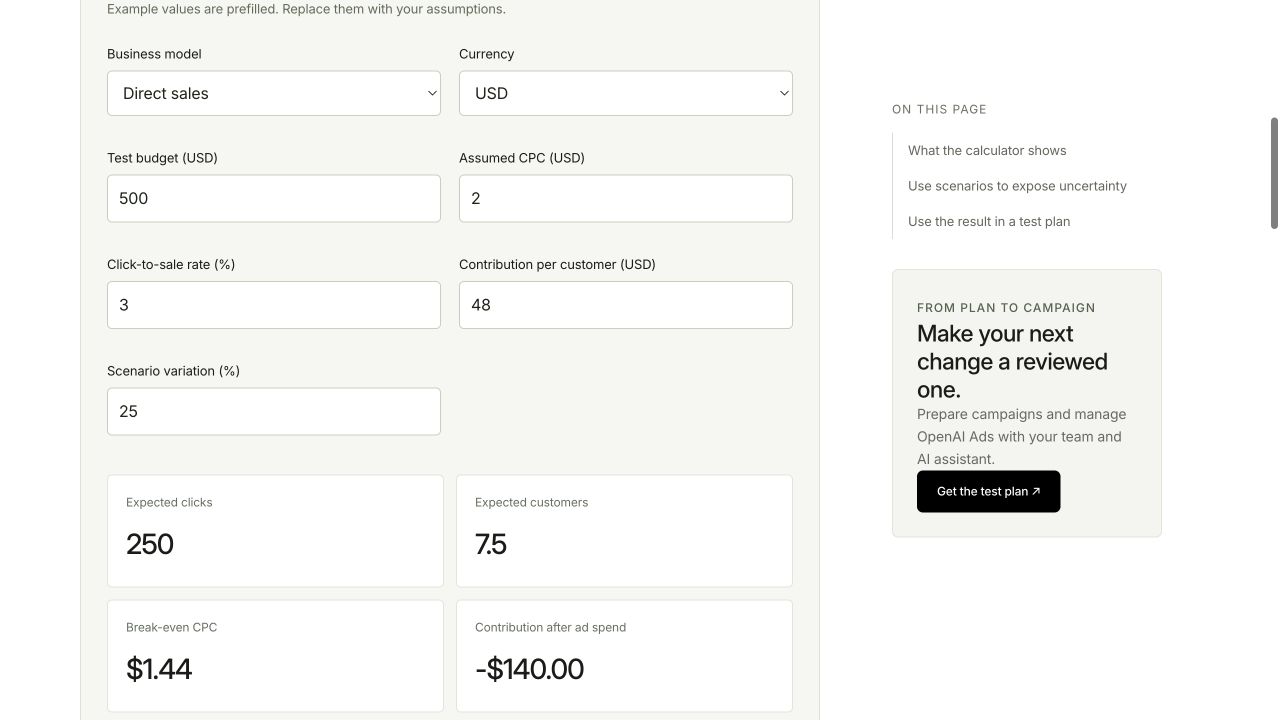
Use a range where the inputs are uncertain. The free budget calculator shows how click cost and conversion assumptions affect expected outcomes and break-even CPC. Its output is a scenario based on your inputs, not a prediction of available inventory.
Check measurement and operating capacity
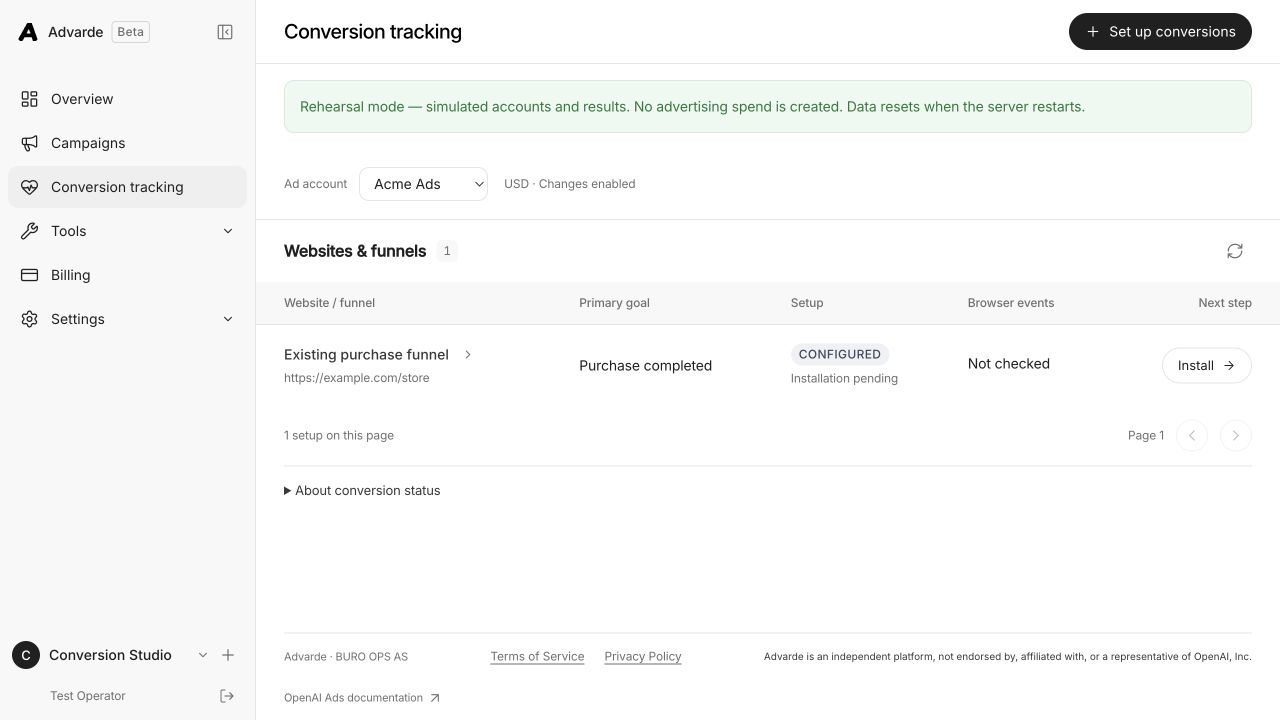
You need a working destination, an event that represents success, and a way to evaluate customer quality. You also need someone to review delivery and respond to failures. A campaign can spend while a form or checkout remains broken.
Prepare the launch checklist and assign owners. Confirm advertiser access before promising a launch date. A tool or agency cannot remove account-level prerequisites controlled by the platform.
Define continue, revise, and stop conditions
A test plan should state the maximum spend, review date, primary outcome, and the evidence required to continue. It should also identify technical conditions that justify an immediate pause, such as an unusable destination or incorrect conversion trigger.
Use “revise” for an informative but incomplete result. For example, qualified visitors may arrive while the booking flow has obvious friction. Fixing that flow and running another bounded test is a different decision from scaling the original campaign.
| Decision | Example rationale |
|---|---|
| Continue cautiously | Reliable measurement and acceptable customer economics |
| Revise and retest | Relevant traffic but an identifiable offer or funnel problem |
| Pause for repair | Broken destination or misleading conversion signal |
| Stop this hypothesis | The completed test fails the predefined business threshold |
Avoid turning early evidence into a benchmark
Document the sample size, dates, geography, offer, and attribution definition. A result from one account describes that test. It does not establish a universal CPC, conversion rate, or return for the channel.
Keep a record of unsuccessful tests as well as successful ones. The next budget decision benefits from knowing what was tried, what was measured, and what remains uncertain.